
The Law Office of Gary E. Ainsworth, LL. B. can answer any questions you might have about Wills, Powers of Attorney and Estates.
WILL YOUR ESTATE PLAN SUCCEED?
The Will is the primary vehicle through which an estate plan is carried out. It matters very little what you may have expressed to others near to you regarding your estate plan and your wishes for distribution. Without a Will the final distribution of your estate may be contrary to the way you would have done it.
Some people think that just because there are only very few assets and nothing of great value that a Will is therefore not necessary. However, in such circumstances a Will is of greater value because such a small estate cannot afford the additional court costs required to appoint administrators to ensure the distribution is made in accordance with the succession laws. The court may require the administrators to purchase an administration bond which may add more unnecessary expense to your estate.
A Power of Attorney may be given to a trusted individual to look after your estate during any loss of capacity you may suffer. For a more detailed description of Powers of Attorney, click here.
WHY BE WITHOUT A WILL?The preparation of a Will is often one of the last things a person wants to do and yet is one of the most important items a person ought to have. It can be the beginning and end of your estate planning. You will be able to direct how you want your assets to be distributed and by whom.
A Will can be used to influence the future care of your dependents by your expression of preferences in the selection of Guardians you have confidence in. Without a Will, the Court appointed Guardian may be relatives you would not have chosen to raise your children. Without a Will, no spouse or infant children surviving you, the assets of your estate will be deposited into Court and be controlled by the Official Guardian. By preparing a Will you will have greater control over the timing and final distribution of the capital of your estate. For example, you may wish to wait until your children are twenty-one (21) years of age before distribution of the capital rather than having the Official Guardian distribute it at the age of majority.
A Will can be used for effective tax planning. Although there are no longer succession duties to be connection with in Ontario, there remain taxes, which could be reduced or deferred through the properly constructed Will. This is particularly important to the small business owner.
Your Will provides the final opportunity to give to the Charity of your choice. You hae the option of giving a portion of your Estate directly to a charitable organization or establishing a charitable trust with specific charitable objects defined by you. Without a Will you cannot expect to have any charity benefitted by your Estate.
A Will overcomes certain technical irritants such as having the authority of the Executors take effect immediately rather than waiting for an Administrator to be given authority by the Court. Also, additional expenses are association with a Court appoint Administrator such as the cost of purchasing an Administration Bond. The Bond along could cost several times the cost of preparing a Will.
ADVANTAGES OF HAVING A WILLWITH A WILL |
WITHOUT A WILL |
|
|
| |
|
| |
|
| |
|
| |
|
| |
|
|
One of the most important aspects of preparing a WILL is choosing an Executor or Executrix and an alternative in the event the first is not able to serve. The person or persons chosen should know your affairs and be capable of carrying out the terms of your Will according to your wishes. For those who die intestate (i.e. without a Will) the Court appoints an Administrator or Administrators who may not be the person or persons whom you would wish to take care of this personal matter of handling your affairs.
Guardian of your childrenIf you have minor children, you should consider who you would prefer to be the Guardian of your children in the event you and your spouse pass on before they reach the age of majority. The administration of the assets held in trust for the benefit of your children may be best achieved by appointing a separate Trustee who is more capable of handling such responsibilities. This Trustee will generally be appointed as Executor and trustee.
SUMMARY OF ASSETS AND DEBTSThis summary of your assets and debts will serve two important functions. First it will provide and up-to-date review of your current Estate. Second, it will provide your Executor and Lawyer with some guidelines to accomplish the administration of your estate in an efficient and effective manner.
The following heading will assist you in preparation of your peronal lists of assets and debts:
ASSETS:
Bank Accounts, Personal Property (Significant items such as car, boat), Real Estate, Insurance (who are Beneficiaries), Investments (Stocks, Bonds, Mutual Funds, Others), Registered Retirement Savings Plans.
DEBTS:
Mortgages, Personal Loans, Charge Cards, Other
It is important to ensure that you provide for your loved ones who are dependent on you. Under the Ontario Family Law Act, your spouse may elect to ignore your Will and receive his or her share of the Estate provided for under that act. This aspect of your Will should be discussed with your Lawyer.
For more information on Estate Administration, click here.
For more information on these matters kindly contact our Law Office. Our office hours are Monday to Friday 9 a.m. to 5 p.m.
CONTACT INFORMATION:
If you have specific questions us.
Address: Suite 101, 294 Rink Street at Rubidge Street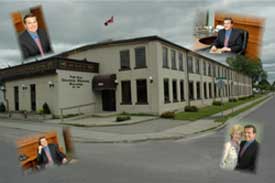
Mailing Address:
294 Rink Street, Suite 101,
Peterborough, ON K9J 2K2
Telephone:705.749.0628
Fax:: 705.749.0633