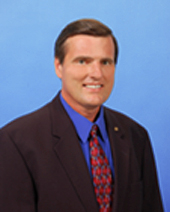
The Law Office of Gary E. Ainsworth, LL. B. can answer any questions you might have about Estate Administration.
ESTATES
After a person dies you must determine whether or not the deceased left a Last Will and Testament. They may have left a copy of the Will in their safety deposit box, or among their personal possessions at home or at their Office.
If the person left a Will, then it is advisable that the appointed Estate Trustee contact the Lawyer who prepared the Will to arrange a meeting to discuss the Administration of the Estate and to define the roles of both the client and the Lawyer.
If you are unable to determine whether or not the deceased left a Will a personal representative of the Estate (such as a Family Member) should consult with a Lawyer immediately so that they may make inquiries as to whether or not the deceased had a Will prepared.
IF THERE IS A WILL:
A person who dies leaving a Last Will and Testament is said to die testate and the Ontario Superior Court of Justice confirms the appointment of the Estate Trustee named in the Last Will and Testament of the deceased.
IF THERE IS NO WILL:
A person who dies without leaving a Last Will and Testament is said to die ntestate and the person willing to take on the role as Estate Trustee must make an Application to the Ontario Superior Court of Justice to be appointed as the Estate Trustee. The Ontario Superior Court of Justice must then approve the Application in order for the person to be officially appointed as the Estate Trustee of the Estate of the deceased.
ESTATE TRUSTEE DUTIES
As the Estate Trustee, You are the person primarily responsible for the administration of the Estate. The following is not an exhaustive list, but it sets out some of the duties of an Estate Trustee:
- Make proper funeral And burial arrangements.
- Determine the names and addresses of the beneficiaries of the Estate and notify them of their interests.
- Determine the full nature and value of the assets of the deceased and compile an inventory list.
- Arrange for a listing of the contents of all safety deposit boxes.
- Open an Estate Bank Account.
- Retain a Lawyer to advise you in the administration of the Estate.
- Instruct your Lawyer to prepare an Application for your signature for a Certificate of Appointment of Estate Trustee With or Without a Will. The Application must be made to the Ontario Superior Court of Justice in the County In which the deceased permanently resided at the time of death.
- Determine the debts owed by the deceased at the time of death and arrange for their payment.
- Contest any debts, if you are not satisfied, as to their validity or legitimacy and settle any compromised claims.
- Prepare and file the necessary tax returns for the deceased in all relevant jurisdictions, pay the taxes owing and obtain a Final Income Tax Clearance Certificate from the Canada Revenue Agency (CRA) and Releases from the Beneficiaries.
- Distribute the assets of the Estate according to the terms of the Will after receipt of the Final Clearance Certificate from CRA.
- Maintain proper accounts during the administration of the Estate.
- Prepare a set of statements for all beneficiaries showing all dealings with the Estate assets during the course of the administration of the Estate.
- Make all decisions as to the administration of the Estate.
Your Lawyer will provide advice on any matter that you may require and offer assistance as it is needed. However, you cannot delegate to your Lawyer or any others the underlying responsibility for decision making.
LAWYER'S ROLE AND DUTIES
- Advise you on all matters in connection with the administration of the Estate.
- Prepare the application to the Ontario Superior Court of Justice to confirm your Appointment as Estate Trustee of the Estate.
- Prepare the advertisement for creditors, if you consider it necessary to advertise.
- Assist in the transfer and/or sale of assets in the Estate by preparing any documents necessary.
- Assist in the preparation of your accounts for review by the Ontario Superior Court of Justice, if necessary to do so.
- Prepare releases for completion by the beneficiaries when legacies are paid or assets transferred to them.
Aside from the first of the Estate Trustee's duties, which is the arrangement of the funeral, your Lawyer may assist the Estate Trustee with any or all of the tasks of the Estate Trustee. However, the responsibility for the decision making in the Estate must at all times rest with the Estate Trustee.
ESTATE TRUSTEE COMPENSATION
In Ontario, an Estate Trustee is entitled to receive compensation for his or her time and resources expended in connection with the administration of the Estate. If the Estate Trustee chooses to take compensation, the amount allowed is at the discretion of a Justice. Experience indicates that the amount currently awarded is approximately 5% of the aggregate value of the Estate depending on the circumstances of the Estate.
LAWYER'S COMPENSATION
A Lawyer will bill you for the legal work involved in the administration of the Estate on the basis of the time spent. If you instruct your Lawyer to assume some or all of the duties of the Estate Trustee as well, your Lawyer will be paid on the basis of the time spent.
Please be advised that you must seek advice from a Tax Advisor regarding the tax consequences of earned income, RRSP's, RRIF's, Capital Gains, and other such taxable items involving the Estate. All such taxes must be paid by the Estate before liquidating certain assets of the deceased and before the Final Distribution to the Beneficiaries. Otherwise, you, as the Estate Trustee, may be found personally liable for payment of such taxes.
For more information on these matters kindly contact our Law Office. Our office hours are Monday to Friday 9 a.m. to 5 p.m.
CONTACT INFORMATION:
If you have specific questions us.
Address: Suite 101, 294 Rink Street at Rubidge Street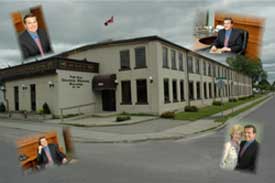
Mailing Address:
294 Rink Street, Suite 101,
Peterborough, ON K9J 2K2
Telephone:705.749.0628
Fax:: 705.749.0633